Key takeaways
Choosing a music distributor for independent labels has become a strategic decision in 2026, not just a question of upload tools.
- The right distributor for a growing label isn’t the one with the most features, but the one whose deal, royalty handling, reporting and support can grow with your catalogue.
- Compare distributors on six criteria: deal structure, rights and royalties, reporting transparency, support, independence and range of services.
- Most problems don’t show up at upload. They show up later: in statements, takedowns, contract terms and missing contacts.
Why does choosing a music distributor matter more in 2026?
Because the market is reshuffling. When you choose a distributor today, you also decide who owns the infrastructure behind your catalogue.
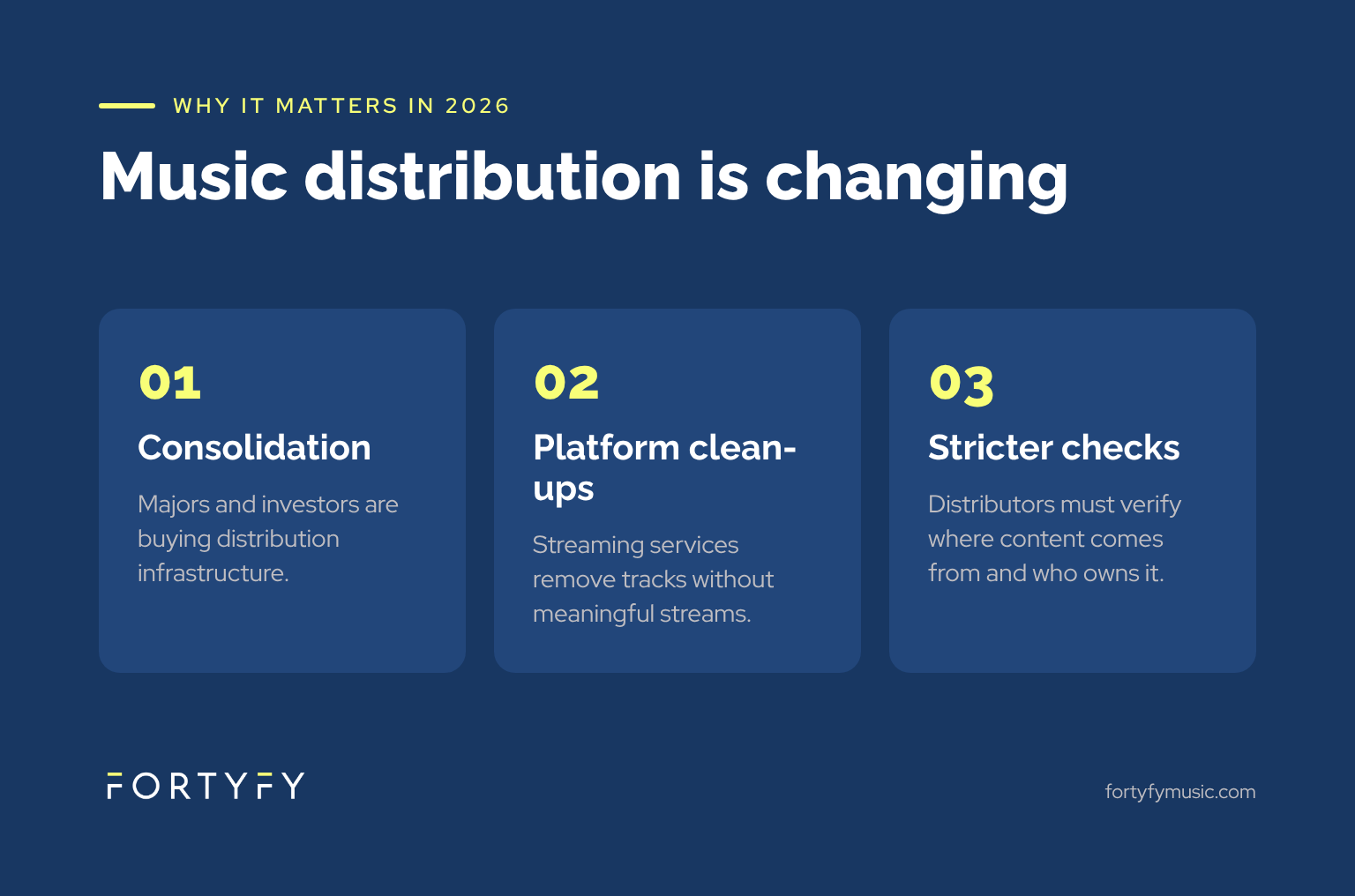
- Distribution is consolidating.
In February 2026, Universal Music completed its acquisition of Downtown, which owns FUGA and CD Baby (Variety). Believe was taken private by its founder Denis Ladegaillerie together with EQT and TCV and stopped trading in Paris in July 2025 (Music Business Worldwide). In Germany, Zebralution changed hands twice in one year: Bookwire bought the Zebralution group from GEMA in March 2026 (Bookwire), and in November Warner Music Group announced the acquisition of its music distribution business, Zebralution Music (WMG). For the labels distributing through Zebralution Music, that means their distributor now belongs to a major.
- Platforms are cleaning up. Deezer now removes AI-generated tracks used for streaming fraud and those that haven’t been streamed for at least six months (Deezer). Catalogue care is becoming as important as delivery.
- Distributors are expected to check more. The IFPI’s Streaming Integrity Initiative raises the bar for verifying where content comes from and who owns it (RouteNote).
For growing labels, that makes 2026 a good moment to choose distribution deliberately.
What makes a good music distributor for independent labels? 6 criteria
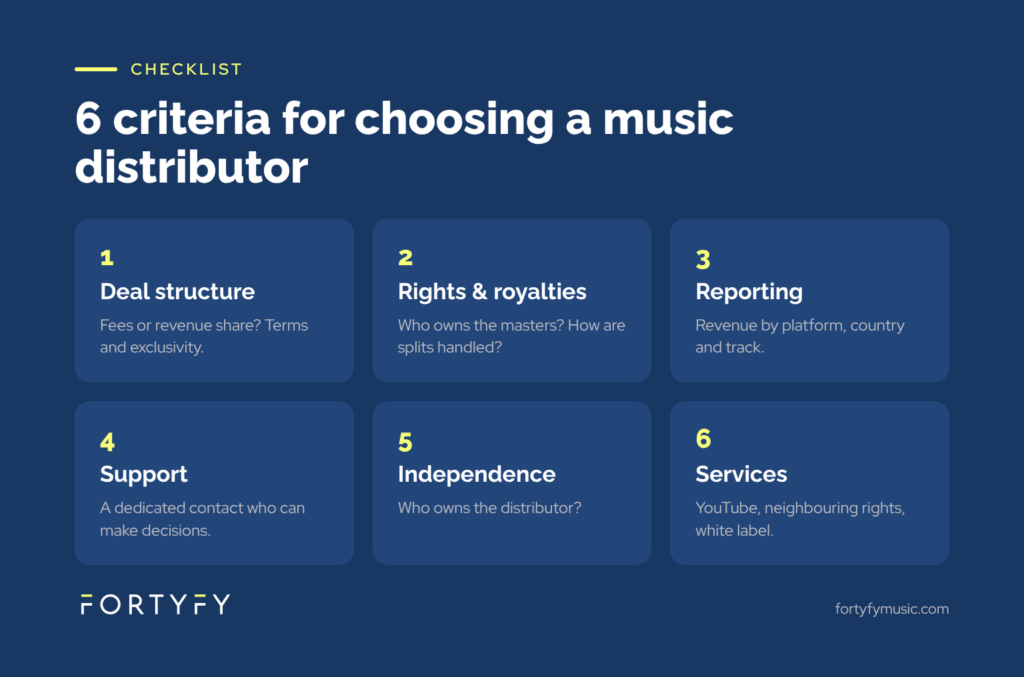
A growing label manages a catalogue, not a single release: several artists, sublabels, splits and rights chains. A good distributor handles all of that. Check these six criteria with concrete questions, not marketing promises.
- Deal structure. Do you pay fees or a subscription, or does the distributor take a revenue share and only earn when you earn? Also check hidden fees (e.g. for certain DSP deliveries or providing EAN/ISRC codes) , notice periods, the scope of exclusivity and possible advances that are recouped from future income.
- Rights and royalties. Who owns your masters when the contract ends? How are splits to artists and partners handled? Can the distributor resolve Content ID conflicts and document rights for samples and covers?
- Reporting transparency. Reporting transparency. Can you see exactly where your money comes from, broken down by DSP, territory and track? How often do statements arrive, and can you export the data? Ask for a sample statement before you sign.
- Support. When a release disappears, a ticket system isn’t enough. Ask whether you get a dedicated contact who can actually make decisions.
- Independence. Who owns the distributor? If it belongs to a major or a financial investor, priorities, terms and contacts can change.
- Range of services. Does the partner also cover YouTube monetisation, neighbouring rights and publishing? Can you manage sublabels separately or appear under your own name with a white-label solution?
The Orchard, Believe, FUGA, Kontor New Media: who owns the big distributors?
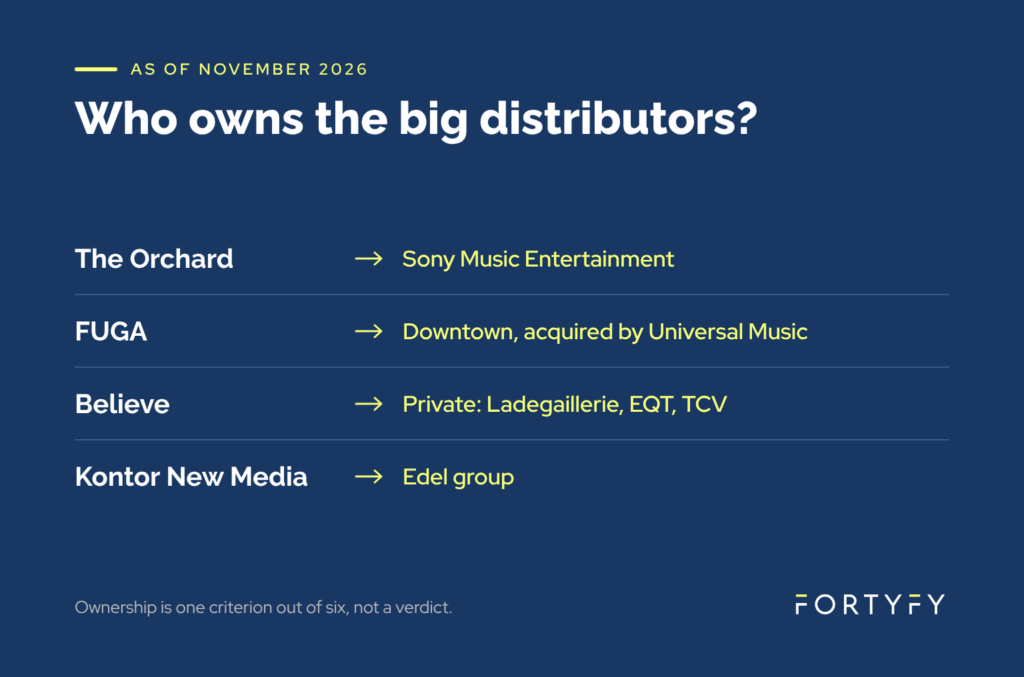
The big label distributors differ most clearly in who owns them. That says nothing about quality, but a lot about whose interests sit in the background. As of November 2026:
- The Orchard has been a wholly owned subsidiary of Sony Music Entertainment since 2015 (Music Business Worldwide).
- FUGA belongs to Downtown, which Universal Music took over in February 2026 through its Virgin Music Group (Variety).
- Believe is privately held by a consortium of founder Denis Ladegaillerie, EQT and TCV (Music Business Worldwide).
- Kontor New Media is a Hamburg-based digital distributor and part of the Edel group (Edel).
Ownership is one criterion out of six, not a verdict. Always check terms, support and reporting directly, and ask for sample statements.
Looking for alternatives? Beyond the big names, there are independent label distributors with personal support and a smaller client base, where your catalogue carries more weight.
What mistakes do labels make when choosing a distributor?
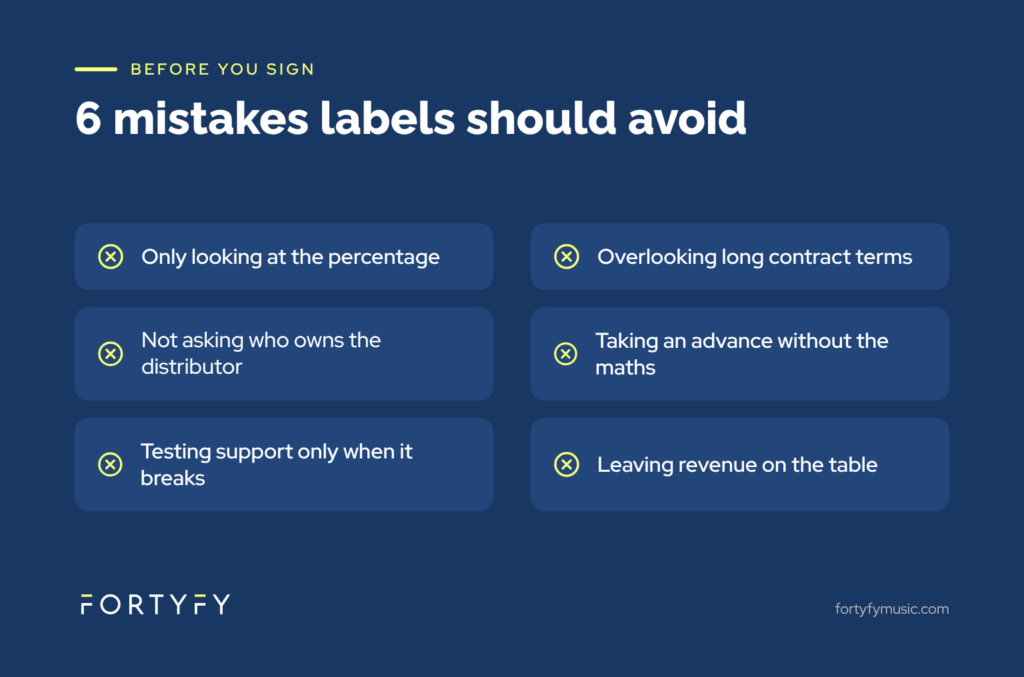
Most mistakes aren’t in the headline terms, but in the small print and day-to-day work:
- Only looking at the percentage. A good split doesn’t help if statements arrive late or can’t be traced.
- Overlooking long terms. Minimum terms and notice periods decide how flexible you are later.
- Not asking who owns the distributor. Ownership decides whose interests come first, and it can change faster than you think, as 2026 has shown.
- Taking an advance without doing the maths. It is recouped from future income and can tie you in for longer.
- Testing support only when something breaks. Ask upfront who your contact is and how fast they respond.
- Leaving revenue on the table. Without YouTube Content ID and neighbouring rights, part of the income you’re owed often goes missing.
Rule of thumb: If you can’t say after the first call how you’ll be paid and who you’ll call when something goes wrong, it’s the wrong partner.
Already with a distributor and thinking about moving? Here’s how to switch without losing streams.
FAQ: Choosing a music distributor
- What's the difference between a DIY distributor and a label distributor?
DIY distributors are built for individual artists who upload their own releases. Label distributors manage whole catalogues with several artists, sublabels and rights, and give you dedicated contacts and label tools.
- When does a label distributor make sense?
As soon as you work with several artists, release regularly or need to manage splits, sublabels and additional revenue streams like YouTube or neighbouring rights.
- Fees or revenue share: which is better?
It depends on your catalogue. With a revenue share, the distributor only earns when you do. With fees, you also pay for releases that earn little or nothing at all.
- Do I keep the rights to my music?
That depends on your contract. Before you sign, check who owns the masters and what happens to your catalogue when the contract ends.
- Why does a distributor's ownership matter?
Ownership can influence long-term priorities, terms and contacts. If a distributor belongs to a major or a financial investor, factor that into your decision.
- Can I switch distributors without losing streams?
Yes, if your releases are live through your new distributor before the old one takes them down. Keep the same ISRCs so streams, playlists and history carry over. A takedown before the new delivery is live can cost you playlist placements.
- How long does it take to switch music distributors?
Plan a few weeks, depending on catalogue size and your notice period with the old distributor. The safest order: deliver everything through the new distributor, check that all releases are live and correctly matched, then request the takedown. Here’s the full step-by-step guide.
Conclusion: The right distributor grows with your label
Choosing a music distributor for independent labels is a strategic decision for a growing label. Compare deal, royalties, reporting, support, independence and services honestly, and you’ll find a partner that strengthens your catalogue long term.
Why labels work with FORTYFY
FORTYFY is an independent distributor based in Hamburg with more than 20 years of experience in digital distribution. We work with a select group of labels and look after every catalogue personally.
- No hidden costs: We only earn when you earn.
- Independent: No major behind us, full control over your catalogue.
- Everything in one place: Music distribution, YouTube monetisation, neighbouring rights and publishing.
- Personal support: Dedicated contacts instead of a ticket system.
Your label is growing. Your distribution should grow with it. Let’s talk.